Realistic Meal Planning, Part 3: Flexible Recipes That Make Healthy Eating Easier

By the time most people quit meal planning, it isn’t because they hate cooking.
It’s because they’re tired of thinking.
Recipes promise ease, but they often do the opposite. They require specific ingredients you don’t have, multiple steps, and the mental energy to decide whether it’s worth the effort after a long day. When one recipe doesn’t work, the whole plan can fall apart.
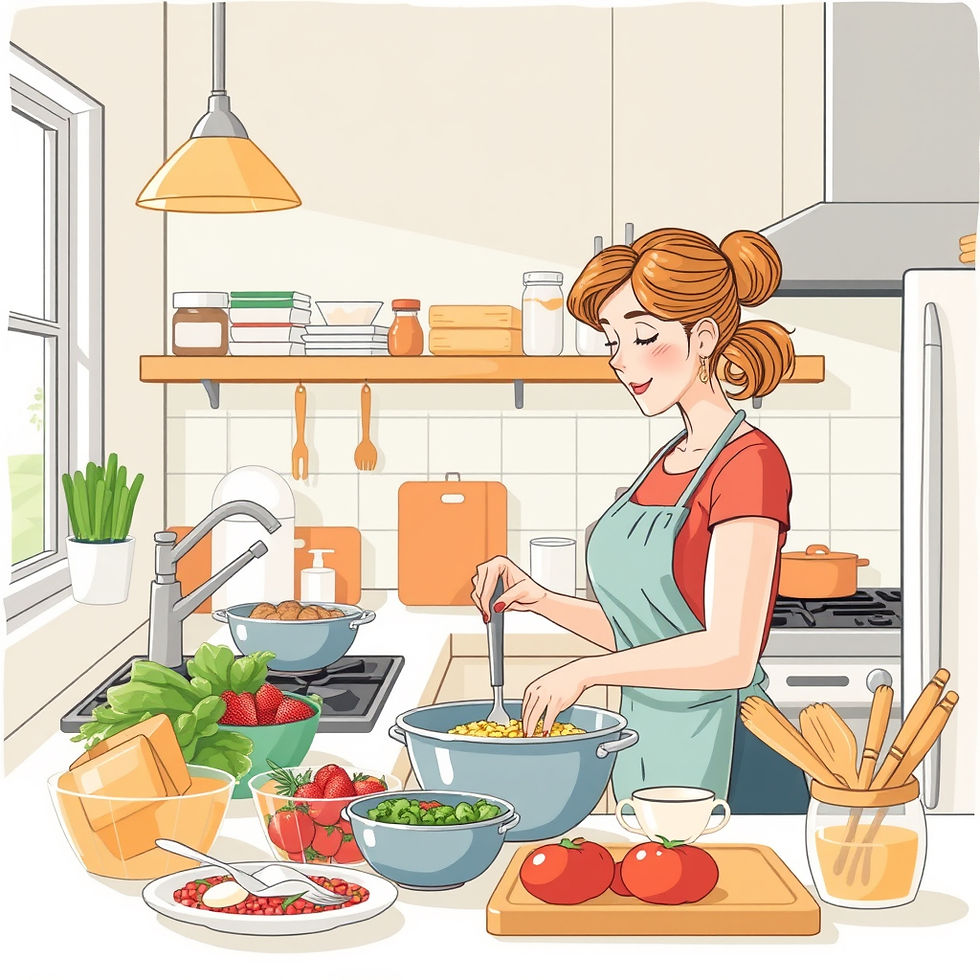
That’s why I don’t rely on recipes alone. I rely on frameworks.
Frameworks are structured patterns for planning meals that let you use what’s already in your fridge, adjust for preferences, and keep meals interesting without starting from scratch every week.
Most of my meals follow the same basic pattern: a protein, a couple of vegetables, and something filling if we need it. That’s it. I’m not reinventing dinner every night. I’m reusing a system that works.
Over time, I’ve landed on a handful of principles that guide nearly every meal I plan:
A protein and two - like a good Southern diner, but built around a healthy protein, a vegetable, and a crowd favorite. Sometimes with sneaky upgrades for nutrition.
Dump and go - freezer-friendly meals or doubled recipes that can be thawed and served later when life is busier.
The protein flip - the same rotisserie chicken, just dressed differently.
Family-friendly backups - quick, kid-approved options ready when the main meal is a risky sell.
Breakfast on the run - reheatable bites or muffins that pack protein and nutrients without daily mess.
Multi-meal snack prep - ingredients that work for snacks and meals.
Flavor fixing — because not every meal is a winner the first time, and herbs and spices are our friends.
Instead of planning seven different dinners, I plan two or three anchor meals each week.
These are larger portions that reheat well, freeze easily, and can be repurposed. Leftovers
are intentional.
A roasted chicken might be dinner one night, tacos the next, and soup or salad later in the week. Soups and chilis are almost always doubled, one for now and some for later. My family moves through seasons of flexibility and seasons of nonstop chaos and having meals already frozen and ready to go makes those busy weeks much easier.
Toward the end of each month, I take a quick inventory of what we have and plan the next month loosely. We have staple nights that never change: Taco Tuesday (any Mexican-style meal counts) and Friday pizza and movie night if the school week went well. Breakfast-for-dinner often replaces eating out, and Sunday rotates between soups or sandwiches.
With those nights set, I only need to plan a few flexible dinners each week. That’s where creativity happens; pot roast one night, leftovers turned into shepherd’s pie another, quick assembly meals when time is tight. Some nights lean on dino nuggets for the kids, paired with fruit and a vegetable, while I use rotisserie chicken for salads or wraps.
I always leave space for leftovers or a night out. Plans that don’t allow breathing room don’t last.
This approach saves time, money, and mental energy. It also cuts down on dishes, which matters more than most people admit.
I plan ingredients, not just meals. If I’m chopping vegetables, I chop enough for more than one use. If I’m cooking protein, it shows up in more than one form. Changing seasoning, sauce, or format keeps meals from feeling repetitive without adding work.
Breakfast and snacks matter too. When mornings are chaotic or afternoons drag, simple rotations help stabilize energy and prevent the “nothing sounds good so I’ll grab whatever” cycle.
And throughout all of this, I don’t focus on restriction.
I focus on addition.
Adding protein, fiber, fruits, vegetables, and hydration naturally crowds out less supportive choices without making food feel punitive. When meals are satisfying, cravings quiet down.
When food feels flexible, consistency becomes possible.
Healthy eating doesn’t require perfect recipes.It requires systems that bend when life does.
That’s what these frameworks are for: to support your life, not control it.
About the Author
Stephanie Pilkinton, RN, MSN, FNP-C, PMHNP-BC
Founder of Sweet Tea & Science | Nurse Practitioner | Writer | Wellness Advocate
Stephanie is a dual-certified nurse practitioner with a passion for blending evidence-based medicine with everyday life. She believes wellness should feel approachable, not overwhelming — and that a little Southern comfort and curiosity go a long way.
Follow her journey and join the conversation at Sweet Tea & Science.


Comments